
Demolition Salvage
Comments Off on Demolition SalvageWhat Is Demolition Salvage?
Demolition salvage is the process of recovering valuable materials from a structure before or during its demolition. Rather than sending everything to a landfill, the goal is to identify what can be reused, recycled, or resold. Materials like steel, concrete, brick, wood, and architectural elements are carefully separated for another life in construction or manufacturing.
For O’ROURKE, demolition salvage is not an afterthought; it’s a planned and integrated step in every project. Each site is evaluated for its potential to yield reusable materials before the first piece of equipment arrives. The result is a more sustainable demolition that benefits clients, communities, and the environment.
O’ROURKE’s Sustainable Demolition Approach
O’ROURKE’s demolition salvage process starts long before the wrecking ball. The team conducts a full site assessment to understand which materials can be recovered. Engineers, environmental specialists, and project managers work together to coordinate dismantling, separation, and transport strategies that align with local recycling and environmental regulations.
Every project follows a similar set of sustainable priorities:
- Reuse whenever possible: Many materials, like structural steel and brick, can be directly reused after cleaning or processing.
- Recycle efficiently: When reuse isn’t possible, O’ROURKE works with certified recyclers to ensure materials are converted responsibly.
- Reduce landfill waste: We consistently diverts large percentages of demolition debris from disposal facilities.
- Report transparently: Clients receive documentation showing what materials were recovered, where they went, and how much waste was avoided.
This systematic approach has helped O’ROURKE become a trusted partner for developers and municipalities pursuing environmentally responsible demolition projects.
Sorting, Recycling, and Repurposing
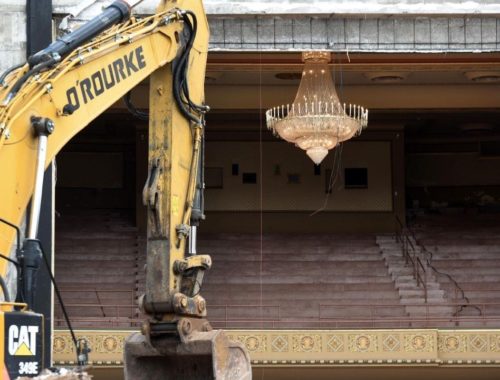
Recovered materials are transported to approved recycling or processing facilities. O’ROURKE maintains strong partnerships with regional recyclers and suppliers to ensure materials are reused effectively. Concrete is often repurposed as backfill or aggregate. Metals are melted and returned to manufacturing supply chains. Even non-structural items like fixtures and doors can find new life through resale or donation.
Throughout the process, detailed documentation tracks every load removed from the site. This data supports environmental reporting, waste diversion metrics, and sustainability certifications.
Salvaged Materials
Demolition sites contain more reusable materials than most people expect. O’ROURKE’s teams are trained to identify and recover these valuable resources efficiently and safely.
- Structural Steel: Salvaged steel is cleaned, sorted, and shipped to mills for reprocessing or reused in structural applications.
- Concrete and Masonry: Concrete is crushed and repurposed as aggregate for new roads, foundations, and site fill.
- Brick and Stone: Older buildings often contain durable bricks and cut stone that can be cleaned and reused in restoration work.
- Wood and Lumber: Heavy timbers and framing lumber are reclaimed for new construction or repurposed into furniture and flooring.
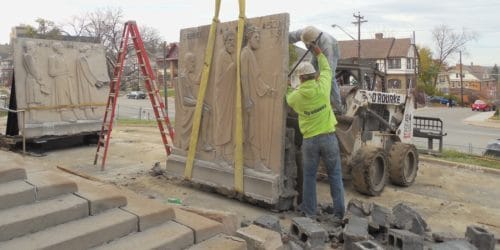
- Architectural Elements: Fixtures, doors, windows, and ornamental metals are preserved and reused in adaptive reuse or historical projects.
By recovering these materials, O’ROURKE reduces both environmental impact and disposal costs—while giving new life to quality building components.
Our Demolition Salvage Process
O’ROURKE’s demolition salvage process is structured for precision, efficiency, and accountability. Every step is documented to ensure materials are handled responsibly and safely.
1. Site Assessment
Before demolition begins, the project team surveys the structure to identify materials suitable for recovery. This step includes reviewing blueprints, inspecting key structural areas, and cataloging components with salvage potential.
2. Selective Demolition
Crews carefully dismantle sections of the structure, removing items that can be reused or recycled. This controlled approach preserves the integrity of materials and ensures safety throughout the process.
3. Sorting and Recovery
Once materials are separated, they are sorted into categories like metals, concrete, wood, and mixed debris. Specialized equipment, including mobile crushers, magnets, and material handlers, helps streamline this stage.
4. Transport and Recycling
Recovered materials are transported to approved recycling or reuse facilities. O’ROURKE coordinates logistics to minimize transportation distance and emissions, often using regional partners to close the loop locally.
5. Documentation and Reporting
After the salvage process is complete, O’ROURKE provides clients with detailed reports showing the quantities and types of materials recovered. This data is used for project certifications, environmental reports, and internal sustainability metrics.
Sustainability and reporting
Many owners track diversion, reuse, and donation outcomes. Our reporting supports those needs.
- Diversion tracking by category and weight
- Receipts and manifests from recycling facilities and scrap buyers
- Donation acknowledgments for qualifying items
- Photo documentation before removal, during removal, and at staging
- Narrative summary that connects salvage steps to project goals
For projects pursuing LEED v4/4.1 Materials and Resources credits, we align data with credit language. We list end markets, facilities, and percentages. Your team can place this data into the project’s documentation platform.
Why Sustainable Demolition Matters
The construction and demolition industry produces millions of tons of waste each year, much of it still usable. Demolition salvage changes that equation. It transforms what would have been waste into raw material for new projects.
As more organizations focus on sustainability, the demand for responsible demolition continues to rise. Property owners are looking for contractors who can deliver both efficient demolition and meaningful environmental impact. From high-rise dismantling to heavy industrial sites, O’ROURKE has proven that demolition can be both efficient and environmentally sound. Salvage plays a key role in achieving that balance.
Why Owners Choose O’ROURKE
We engage during preconstruction. Our team inventories likely salvage items, ranks value by market demand, and sequences removal so crews do not conflict. Your superintendent gets a schedule that fits the critical path.
We prepare site specific safety plans, perform daily Job Hazard Analyses, and follow OSHA rules for lockout and tagout. Rigging plans cover picks, travel paths, and staging. Crews use rated gear from recognized brands (Crosby rigging hardware, CM hoists) and follow manufacturer guidance.
We maintain relationships with scrap buyers, equipment resellers, auction platforms, and donation partners. Items move through the right channel based on condition and timing. Metals sell by weight. Switchgear and mechanical units move through brokers or auctions. Architectural items may go to reuse centers or directly to designers and contractors.
You receive weights by category, receipts and manifests, photos, and a summary of resale proceeds or donation acknowledgments. We align our reporting with LEED v4/4.1 Materials and Resources credits when relevant. We also provide diversion summaries you can use for ESG reports.
O’ROURKE manages on-site sorting, packaging, labeling, temporary storage, loading, and transport. We handle refrigerant recovery through Section 608 certified technicians when chillers or RTUs are removed. Universal wastes such as lamps and ballasts follow EPA guidelines with proper containers and manifests.
Benefits of Demolition Salvage
Choosing demolition salvage provides benefits that extend beyond environmental responsibility. O’ROURKE helps clients turn sustainability into measurable project value.
Environmental Impact
Diverting waste from landfills significantly reduces a project’s carbon footprint. Recycling metals and reusing masonry prevents new resource extraction and lowers emissions linked to manufacturing. Salvage also keeps hazardous materials contained and properly handled through regulated recycling streams.
Cost Efficiency
Salvage can lower overall project expenses by reducing hauling and landfill fees. Some recovered materials carry resale value, which can offset demolition costs. Over time, this approach makes large-scale demolition more economically sustainable for owners and contractors alike.
Community Value
Reclaimed materials often stay within the region, supporting local construction, art, and restoration projects. O’ROURKE’s partnerships with local reuse centers and architectural salvage companies ensure valuable materials benefit nearby communities.
Compliance and Recognition
Many government and private development projects now require waste diversion targets or green certifications. Demolition salvage supports compliance with LEED and similar programs by providing quantifiable data on materials recovered and recycled.
Ready For A Salvage Assessment?
Share your project address, structure type, approximate square footage, and target start date. If you have drawings, equipment schedules, or photos, include them. We will respond with a short plan that lists priorities, rough value ranges, staging needs, and next steps. If you need a firm number for bidding, we can deliver a detailed scope with unit rates and assumptions.
Specialty Demolition
Comments Off on Specialty DemolitionWhen a structure needs to come down with precision, not power, that’s where O’ROURKE’s specialty demolition team comes in. From interior dismantling to complex decommissioning, O’ROURKE brings technical skill, control, and decades of experience to every project.
What Is Specialty Demolition?
Specialty demolition refers to controlled, engineered methods used to dismantle structures selectively. Unlike total demolition, these projects require precise techniques to remove specific sections, preserve adjacent areas, or handle hazardous materials. The goal is simple: remove what needs to go while protecting what stays in place.
These projects often occur in environments where downtime, contamination, or vibrations must be minimized. Examples include hospitals, research labs, power generation sites, and historic buildings. Each site demands a custom plan that accounts for structure type, surrounding infrastructure, and environmental controls.
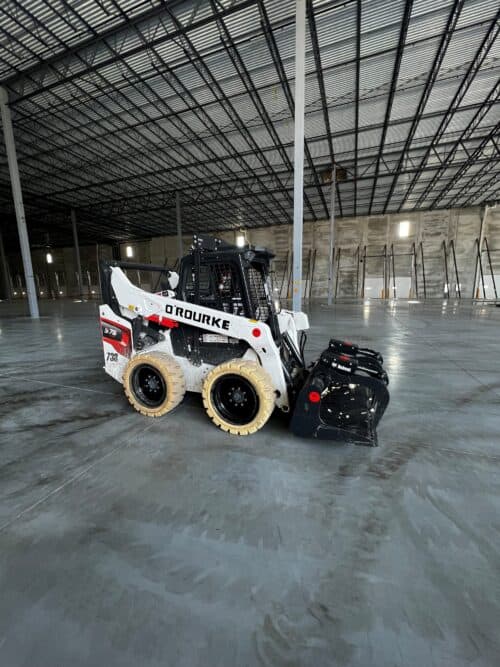
Types of Specialty Demolition Projects
No two demolition projects are the same. Each site has its own challenges, from structural limitations to active utilities or environmental constraints. O’ROURKE’s specialty demolition division manages these challenges with tailored methods that reduce risk and maximize efficiency.
Industrial Decommissioning
Industrial facilities often require staged demolition to protect operational systems or adjacent buildings. O’ROURKE manages the removal of process equipment, tanks, and utilities while coordinating with environmental consultants. Hazardous material containment, such as asbestos and lead, is addressed through integrated remediation efforts.
Our teams handle mechanical separations, floor slab removal, and below-grade structure demolition while ensuring minimal disruption to ongoing operations.
Interior and Selective Demolition
Hospitals, data centers, and research labs rely on O’ROURKE’s interior demolition expertise to prepare for renovations or expansions. These projects demand dust control, vibration monitoring, and noise mitigation to keep critical systems online.
Crews use negative air machines, soft demolition tools, and controlled hand removal methods to protect surrounding spaces. We plan schedules around client operations, completing work during off-hours when necessary.
Controlled Demolition in Active Environments
Some facilities must stay open even while major changes are underway. O’ROURKE’s controlled demolition service supports hospitals, laboratories, and research centers that cannot pause their operations.
Crews plan each project to maintain air quality, reduce vibration, and avoid interference with ongoing work. Temporary barriers, negative air machines, and real-time monitoring systems help maintain compliance and protect nearby staff and visitors.
Structural Separation and Building Modification
Some projects require partial building removal while leaving the rest intact. O’ROURKE specializes in structural separations, using engineered supports and cutting sequences to isolate one section from another. This approach is often used in expansions, renovations, or property reconfigurations where structural integrity must remain intact.
Bridge, Stack, and Tower Demolition
Tall and complex structures require controlled dismantling. O’ROURKE performs these projects using cranes, saw cutting, and mechanical methods designed to prevent collapse or uncontrolled debris. Each lift is planned, each connection mapped, and each section safely lowered to the ground for removal.
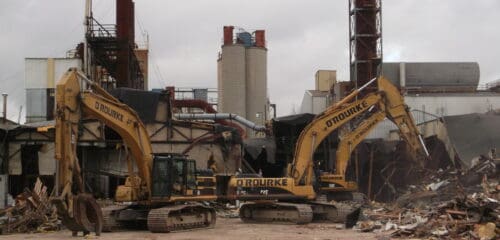
O’ROURKE’s Expertise in Specialty Demolition
Decades of Complex Project Experience
O’ROURKE’s reputation was built on completing demanding projects others turned down. We’ve executed work in active facilities, high-risk industrial plants, and urban settings with strict safety and environmental standards. Projects include:
- Decommissioning power plants with active substations on site
- Selective removal of hospital wings without interrupting operations
- Dismantling structural steel bridges with controlled crane picks
- Concrete and steel separation within live production environments
Every project begins with an engineering review to understand the building’s composition and support system. That foundation allows our crews to work methodically, ensuring control during every phase of the demolition.
Advanced Engineering and Planning
The key to specialty demolition lies in preparation. O’ROURKE’s in-house engineers analyze structural drawings, assess load paths, and plan each step before work begins. Detailed sequencing and temporary shoring designs prevent unplanned structural movement.
3D modeling, drone surveys, and on-site testing help identify risks and refine methods. Our planning also includes environmental and safety reviews to address dust suppression, noise management, and debris handling. Clients receive a comprehensive demolition plan outlining methods, equipment, and safety measures before the first cut or lift.
Specialized Equipment and Techniques
O’ROURKE’s equipment fleet includes tools specifically designed for specialty demolition. Our teams use:
- Diamond wire saws for precision concrete cutting
- Robotic demolition machines for confined or hazardous areas
- High-reach excavators for multi-story removals
- Hydraulic shears and grapples for controlled dismantling
- Negative air systems and HEPA filtration for interior projects
This technology allows for precise work in areas where vibration or dust control is critical. Our operators are trained to adapt equipment configurations to each site’s unique challenges.
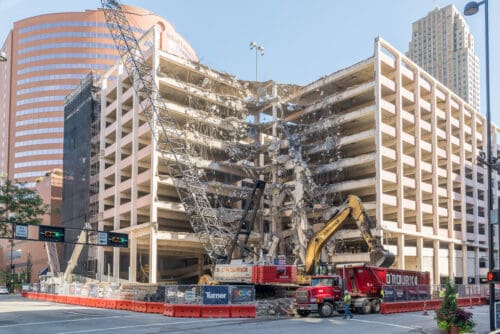
How Specialty Demolition Supports Redevelopment
Specialty demolition plays a vital role in urban renewal, facility modernization, and sustainability initiatives. By removing only the sections that need replacement, property owners can reduce waste and preserve valuable infrastructure.
O’ROURKE’s methods make these improvements practical. Selective dismantling helps prepare sites for adaptive reuse while maintaining compliance with local building codes. Controlled demolition of interior sections allows for energy-efficient system upgrades without full reconstruction.
This precision-based approach saves time, lowers costs, and supports a more sustainable future for industrial and commercial development.
Why Choose O’ROURKE for Specialty Demolition
O’ROURKE’s experience spans more than six decades. Founded as a family-owned company in Cincinnati, the firm has evolved into one of the most respected demolition and sitework contractors in the Midwest.
Here’s what sets O’ROURKE apart:
- Comprehensive capabilities – From full structural demolition to precise interior dismantling, every project is managed in-house.
- Experienced workforce – Supervisors and operators bring extensive field knowledge, ensuring smooth coordination between teams.
- Safety-first culture – The company maintains an industry-leading safety record supported by ongoing training and certification programs.
- State-of-the-art equipment – O’ROURKE owns and maintains its own machinery, reducing delays and maintaining full operational control.
- Proven reliability – Clients trust O’ROURKE for projects with tight schedules, complex logistics, or high-risk environments.
The company’s long-term partnerships with municipalities, industrial corporations, and general contractors reflect its ability to deliver consistent results under demanding conditions.
Request a Quote or Consultation
O’ROURKE’s specialty demolition services are available for projects of any size or complexity. Whether you need selective interior removal, process dismantling, or precision concrete cutting, the team is ready to plan and execute safely.
Contact O’ROURKE Wrecking Company to schedule a consultation or request a detailed proposal. Discuss your project requirements, receive a tailored demolition plan, and see how O’ROURKE’s expertise can move your project forward efficiently and safely.
Stadium Demolition
Comments Off on Stadium DemolitionWhen a stadium reaches the end of its lifespan, taking it down is far more complex than knocking down walls and hauling away debris. It requires precise engineering, advanced equipment, and an experienced team capable of coordinating every detail. O’ROURKE Wrecking Company has led some of the most recognized stadium demolition projects across the United States. From professional sports venues to collegiate arenas, our team manages every phase safely and efficiently.
O’ROURKE leads stadium demolition with an engineering-first process, proven field controls, and clear communication with every stakeholder. We plan the means and methods, manage permits, coordinate with public agencies, and deliver clean, graded ground that is ready for construction.
Ready to talk through your stadium or arena demolition? Request a plan and timeline today.
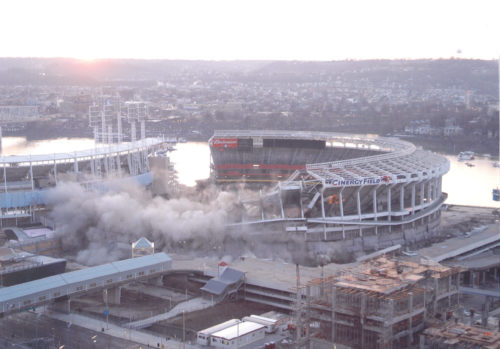
Safe and Strategic Stadium Demolition
Every stadium demolition project begins long before equipment arrives on site. O’ROURKE develops detailed work plans based on engineering studies, 3D modeling, and safety assessments. These plans define the sequence of removal, load paths, and safety buffers.
We collaborate with engineers, owners, and municipalities to minimize disruption and protect nearby infrastructure. Our methods are designed for both safety and precision, especially when a stadium is located in a dense urban environment or near active roadways.
Each structure presents unique challenges, post-tensioned concrete, cantilevered seating decks, or complex steel truss systems. Our team evaluates these structural conditions and chooses the right combination of mechanical and controlled methods to bring them down efficiently. By managing logistics, scheduling, and permitting internally, O’ROURKE ensures that every step aligns with project timelines and safety standards.
Stadium Types We Demolish
- Professional and minor league stadiums and arenas
- Collegiate stadiums, fieldhouses, and natatoriums
- Multi purpose domes and enclosed venues
- Racetracks and grandstands
- Training complexes and practice facilities
Demolition Methods and Equipment
The size and construction type of a stadium determine which demolition approach is best. O’ROURKE uses a range of specialized techniques, supported by a modern fleet of heavy machinery and equipment designed for large-scale dismantling.
Controlled Implosion
When conditions allow, controlled implosion can bring down a massive structure within seconds. This method requires extensive preparation—structural modeling, blast sequencing, vibration monitoring, and public safety planning.
Our engineers work with explosive specialists to design a pattern that ensures the structure collapses inward on its footprint. Crews perform weeks of interior stripping and pre-cutting before the blast, ensuring the load paths behave as predicted. After detonation, cleanup operations begin immediately, with dust suppression and debris hauling handled according to environmental guidelines.
Mechanical Demolition
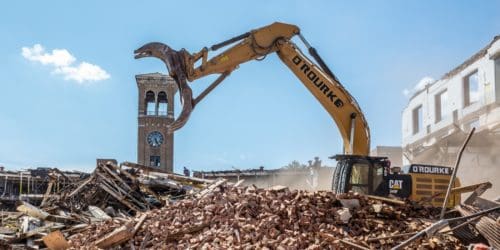
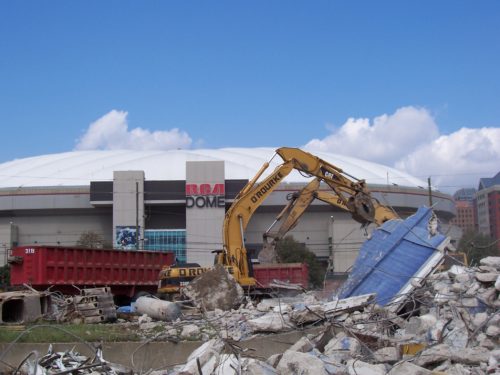
Most stadiums are dismantled mechanically. This method uses high-reach excavators, hydraulic shears, and concrete pulverizers to remove structural components in phases.
Sections of the grandstand, press boxes, and structural steel are taken down methodically, ensuring that each step maintains site safety and stability. O’ROURKE’s operators use advanced attachments to shear through reinforced concrete and separate materials for recycling.
By combining high-reach equipment with precision cutting tools, our crews can dismantle massive structures efficiently without disturbing surrounding properties.
Selective and Interior Demolition
Before the main structure is removed, O’ROURKE performs selective interior demolition. Seats, signage, scoreboards, lighting systems, and HVAC components are removed for reuse, recycling, or proper disposal.
This stage allows for safe handling of electrical and mechanical systems and ensures that all materials are documented before removal. It also supports sustainable waste management, reducing the total debris volume that enters landfills.
Environmental Responsibility and Material Recycling
Stadium demolition often produces tens of thousands of tons of concrete, steel, and other materials. O’ROURKE has a long record of environmentally responsible practices that emphasize recycling and reuse.
Our crews separate materials on site using magnets, screening systems, and mobile crushing units. Concrete is crushed and repurposed as aggregate for new construction. Steel and metals are sorted and sent to regional recycling facilities.
On average, more than 90 percent of materials from a stadium demolition are recovered for reuse or recycling. This approach conserves natural resources and supports sustainable redevelopment of the site.
O’ROURKE complies with all EPA, OSHA, and state environmental standards, ensuring that air quality, stormwater management, and noise control are addressed throughout the project. When hazardous materials such as asbestos or PCB lighting are present, our environmental division handles abatement prior to demolition, keeping the process compliant and safe. Our goal is to leave a clean, developable site ready for new construction or public use.
Risk Management and Demolition Controls
Structural Stability
Sequencing and temporary measures protect stability as elements come down. We cut and remove members in a way that prevents unplanned loads. Engineering reviews confirm each step before crews proceed.
Dust, Noise, and Vibration
Air monitors track particulate levels. Misting systems address dust at the source and at perimeter lines. We set noise windows and use mufflers and equipment placement strategies. Vibration monitors track readings near sensitive structures and utilities.
Adjacent Property Protection
Many stadiums share property lines with arenas, labs, or housing. Our plans include debris curtains, scaffolding, and controlled exclusion zones. We survey adjacent buildings before work begins and document conditions with photos and video.
Utilities and Critical Infrastructure
Gas, electric, steam, chilled water, and communication lines often run under concourses and plazas. We verify routes, install protection where needed, and maintain access for campus and city operations. Any temporary outages are coordinated with owners.
Emergency Action Planning
We prepare for weather, equipment failures, and unexpected conditions. The team conducts drills, confirms backup communications, and maintains access for emergency response.

Why Choose O’ROURKE for Stadium Demolition
Selecting the right demolition contractor determines whether a complex stadium removal stays on schedule, on budget, and within safety limits. O’ROURKE Wrecking Company provides unmatched experience in large-scale and high-profile projects.
- Proven Track Record: Decades of successful stadium, arena, and sports complex demolitions nationwide.
- In-House Resources: Company-owned fleet of cranes, excavators, and specialized demolition attachments maintained to the highest standards.
- Full-Service Capabilities: From pre-demolition abatement to site restoration and grading.
- Experienced Crews: Long-term employees trained in heavy industrial demolition and environmental safety.
- Client Collaboration: Transparent communication, scheduling updates, and dedicated project management.
Get Started on Your Stadium Demolition Project
Every stadium tells a story, but when it’s time for a new chapter, you need a demolition partner that understands scale and precision. O’ROURKE Wrecking Company brings decades of expertise, advanced equipment, and a commitment to safety that has earned the trust of cities, developers, and sports organizations nationwide.
Our team works with you from initial planning to final site restoration, ensuring that every phase meets engineering standards and environmental goals. If you’re planning a stadium demolition, contact us today to schedule a consultation or request a proposal.
Total Demolition
Comments Off on Total DemolitionWhen a structure reaches the end of its use, O’ROURKE is the partner clients call for complete and controlled removal. Total demolition means taking down every part of a structure (steel, concrete, utilities, and foundations) until the site is ready for what comes next. With more than sixty years in the demolition and site-preparation industry, O’ROURKE delivers these projects safely, efficiently, and in full compliance with local and federal regulations.
Our teams manage projects across the Midwest and beyond. From aging industrial plants to city hospitals and commercial complexes, we bring the planning discipline, heavy equipment, and skilled workforce to handle demolition at any scale.
Call O’ROURKE today to schedule a total demolition consultation or request a bid.
What Is Total Demolition?
Total demolition is the complete removal of a building and its supporting structures down to the slab or below-grade foundations. It is often used when a facility is unsafe, contaminated, or being replaced with new development.
While selective demolition targets specific portions of a structure, total demolition clears the site entirely. This approach may include utility isolation, structural dismantling, debris removal, and final grading to prepare the land for future use.
Projects that require total demolition include:
- Outdated manufacturing and energy facilities.
- Damaged or condemned buildings.
- Redevelopment sites that require full clearance.
- Infrastructure replacements such as bridges or water towers.
O’ROURKE’s team assesses each site individually, ensuring all hazards, materials, and utilities are identified before work begins.
Our Total Demolition Capabilities
O’ROURKE Wrecking Company has the resources, manpower, and technology to handle demolition projects of any scale. Our experience covers a wide range of environments, from rural industrial zones to downtown city blocks.
Large-Scale Industrial and Commercial Demolition
Our team has completed some of the region’s most demanding industrial and commercial demolitions. We handle power plants, chemical facilities, and large warehouses where coordination with environmental and engineering teams is essential. Each project begins with a comprehensive plan that outlines safety protocols, waste management, and site restoration goals.
O’ROURKE’s crews work efficiently while minimizing disruption to nearby operations. We maintain continuous communication with site owners and contractors to ensure schedules and budgets remain on track.
High-Rise and Structural Demolition
High-rise and heavy structural demolition requires specialized equipment and trained operators. O’ROURKE uses high-reach excavators, hydraulic shears, and cranes for controlled dismantling of tall or reinforced structures. When necessary, we collaborate with licensed blasting engineers to execute precision explosive demolitions.
Before any demolition begins, our team conducts detailed engineering studies to understand load paths and potential collapse zones. Protective barriers and exclusion areas are established, ensuring worker and public safety throughout the project.
Bridge and Infrastructure Demolition
Bridge demolition calls for careful sequencing and environmental control. O’ROURKE has dismantled bridges, viaducts, and overpasses in active transportation corridors with minimal disruption to traffic and nearby residents.
Our methods include mechanical removal using cranes and saws, as well as controlled implosions when conditions allow. Coordination with state Departments of Transportation and local municipalities ensures full compliance with safety and environmental regulations.
The O’ROURKE Total Demolition Process
Every successful demolition project starts with a clear plan and a disciplined sequence of operations. O’ROURKE’s process is designed to manage risk, maintain environmental compliance, and minimize disruption to nearby properties.
Pre-Demolition Planning
Planning begins with a site evaluation. Our engineers and project managers perform detailed surveys to map utilities, structural conditions, and environmental factors. Permitting and coordination with local authorities are handled by our in-house compliance staff.
Environmental testing may identify asbestos, lead, or PCBs that require remediation prior to demolition. O’ROURKE coordinates closely with certified abatement teams to ensure the site meets all regulatory standards before heavy equipment moves in.
Controlled Demolition Execution
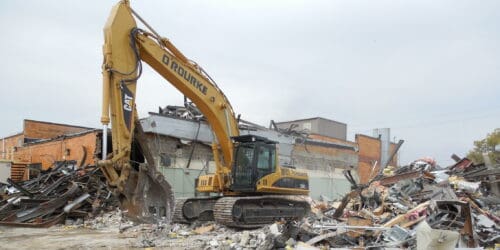
Once the site is prepared, demolition begins using the method best suited to the structure. For large concrete and steel buildings, we use high-reach excavators, shears, and hydraulic hammers. Compact sites may require smaller mechanical equipment and precise sequencing to protect surrounding structures.
All work is directed by supervisors certified in OSHA and MSHA standards. They manage operator rotation, equipment inspections, and real-time adjustments for weather or site conditions. For complex structures, 3D modeling and drone mapping are used to track progress and ensure safe load distribution during teardown.
Debris Management and Recycling
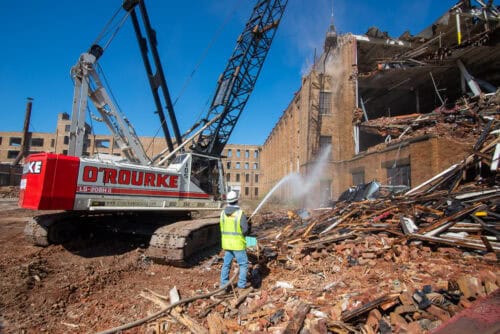
After structural removal, debris is processed on-site for sorting and recycling. Concrete and masonry are crushed for reuse as fill or aggregate. Steel and non-ferrous metals are separated and transported to regional recycling facilities.
Recycling reduces landfill waste and often lowers the total project cost for clients. O’ROURKE’s team tracks and reports material diversion rates to support LEED certification or sustainability goals.
Site Restoration
When the last load leaves the site, our grading crews shape and compact the ground for redevelopment. We provide erosion control, temporary stabilization, and backfilling where required. For clients planning new construction, O’ROURKE can integrate excavation and utility trenching into the final phase, streamlining the transition from demolition to building.
Safety and Environmental Commitment
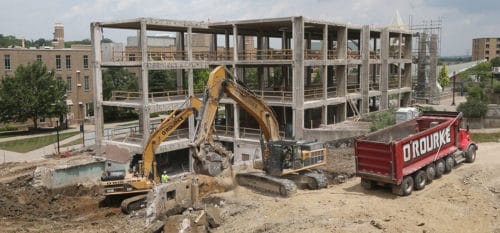
Demolition is inherently complex, but safety and environmental protection define every O’ROURKE project. Each site follows a detailed safety plan tailored to local conditions and project scale. This includes hazard analyses, fall protection systems, confined-space procedures, and constant monitoring.
Dust and noise are controlled using misting systems, water cannons, and real-time air-quality monitors. Equipment is fitted with Tier 4 Final engines to reduce emissions. Vibration sensors are placed near neighboring structures to ensure compliance with local tolerances. O’ROURKE’s environmental specialists coordinate disposal of hazardous materials under EPA and RCRA guidelines. Every phase is documented for transparency and audit readiness.
Why Clients Choose O’ROURKE for Total Demolition
Clients across the Midwest choose O’ROURKE because of experience, capability, and performance consistency.
- Proven Track Record: Over sixty years of safe and successful demolition projects.
- Complete Project Management: Planning, permitting, and debris recycling under one roof.
- Advanced Equipment Fleet: High-reach excavators, hydraulic shears, and precision dust-control systems.
- Union-Trained Workforce: Skilled operators and supervisors with certifications in safety and environmental standards.
- Commitment to Quality: Every project is executed with clear communication and verified compliance documentation.
O’ROURKE’s clients include major contractors, developers, municipalities, and federal agencies that rely on dependable results under strict deadlines.
Partner with O’ROURKE for Your Next Total Demolition Project
When a facility reaches the end of its life cycle, the next step requires precision, safety, and trusted experience. O’ROURKE provides full-service total demolition—from planning and permitting through final grading and restoration.
Our in-house team coordinates every phase with the same attention to detail that has defined the company since 1962. Whether your project involves a small commercial teardown or a multi-acre industrial clearance, O’ROURKE ensures the work is done safely and efficiently.