When a property needs to be cleared, the demolition work has to do more than bring down a building. It has to protect the site, control hazards, manage debris, coordinate with utilities, and leave the property ready for what comes next.

O’ROURKE Wrecking Company provides site demolition services for commercial, industrial, municipal, institutional, and redevelopment projects. Our team plans each project around safety, access, schedule, environmental concerns, and the surrounding conditions on the property. From structural demolition and concrete removal to debris hauling and site cleanup, we help owners, developers, contractors, and public agencies move from an existing structure to a workable construction site.

If you need a building, structure, slab, foundation, or full site cleared, O’ROURKE can review the project, define the scope, and build a demolition plan that fits the property.

Complete Site Demolition for Commercial, Industrial, and Public Projects

Site demolition is often one of the first major steps in a construction, redevelopment, or facility improvement project. It may look simple from the outside. A building comes down. Trucks haul material away. The site opens up. In reality, the work depends on careful planning before the first machine starts.

O’ROURKE handles demolition projects that may include building removal, concrete breaking, slab and foundation removal, pavement removal, material separation, recycling, debris disposal, and site clearing. On some projects, the work also includes environmental coordination, abatement planning, utility disconnects, erosion control, dust suppression, and coordination with engineers or general contractors.

A properly managed demolition project helps prevent delays later. Old foundations left in place can slow excavation. Poor debris removal can interfere with grading. Missed utility issues can create major safety risks. That is why O’ROURKE looks at the full site, not just the structure that needs to come down.
Site Demolition Services We Provide

Our site demolition services include:

  • Site clearing
  • Full building and structure demolition
  • Concrete slab removal
  • Foundation and footer removal
  • Pavement and asphalt removal
  • Loading dock and equipment pad removal
  • Selective salvage and material sorting
  • Steel, concrete, brick, block, wood, and debris separation
  • Debris hauling and disposal
  • Recycling coordination where practical
  • Environmental and hazardous material coordination
  • Final cleanup and preparation for the next project phase


Commercial Building Demolition

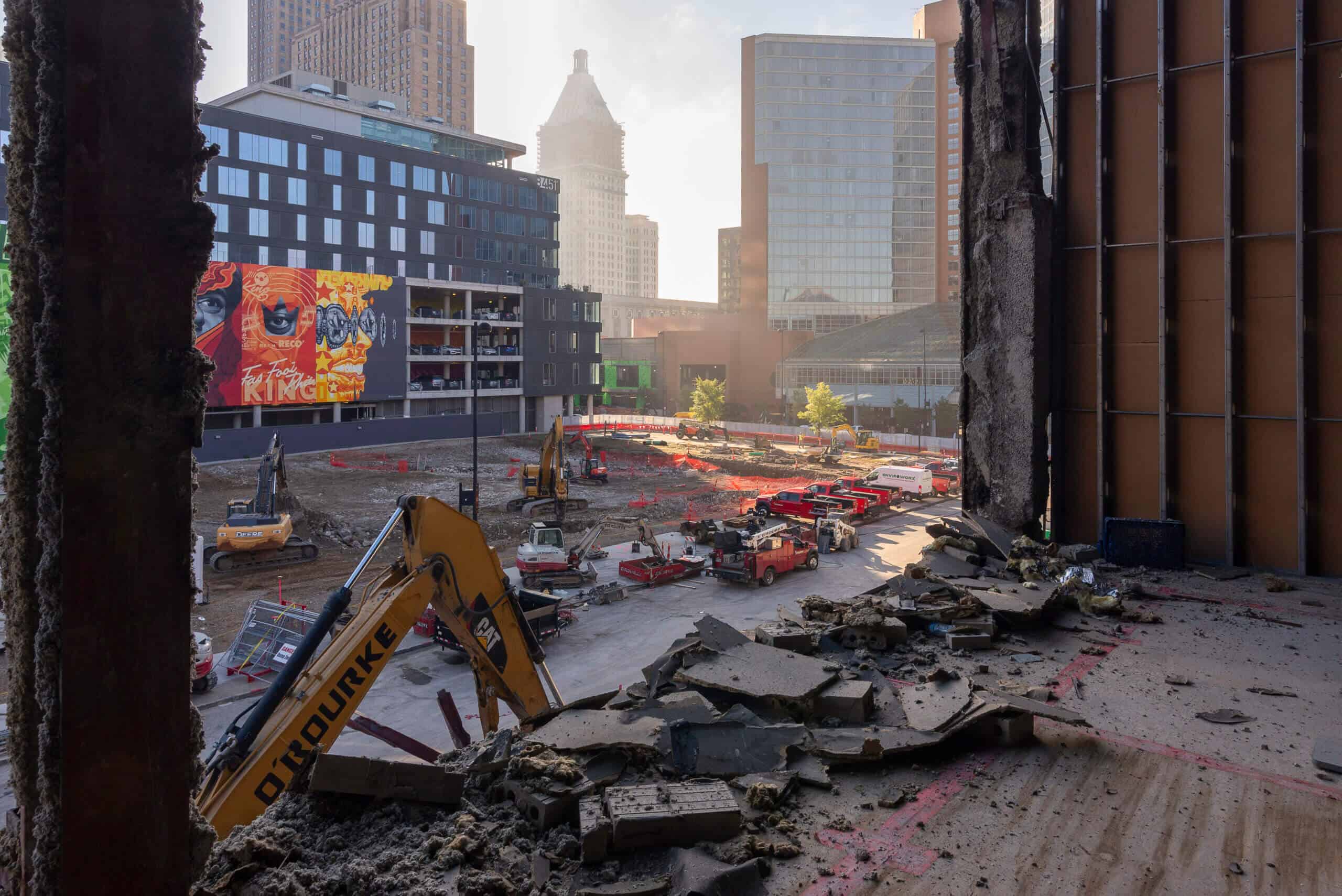
Commercial demolition projects may include office buildings, retail centers, schools, healthcare buildings, warehouses, mixed-use properties, restaurants, shopping centers, and other business facilities. These sites often have nearby parking lots, roads, sidewalks, utilities, neighboring tenants, or public access points that need to be considered during planning.

O’ROURKE can help remove commercial structures while controlling debris, dust, traffic, and site access. We also work with developers, property managers, general contractors, and owners when demolition is part of a larger redevelopment or renovation project.

Industrial Site Demolition

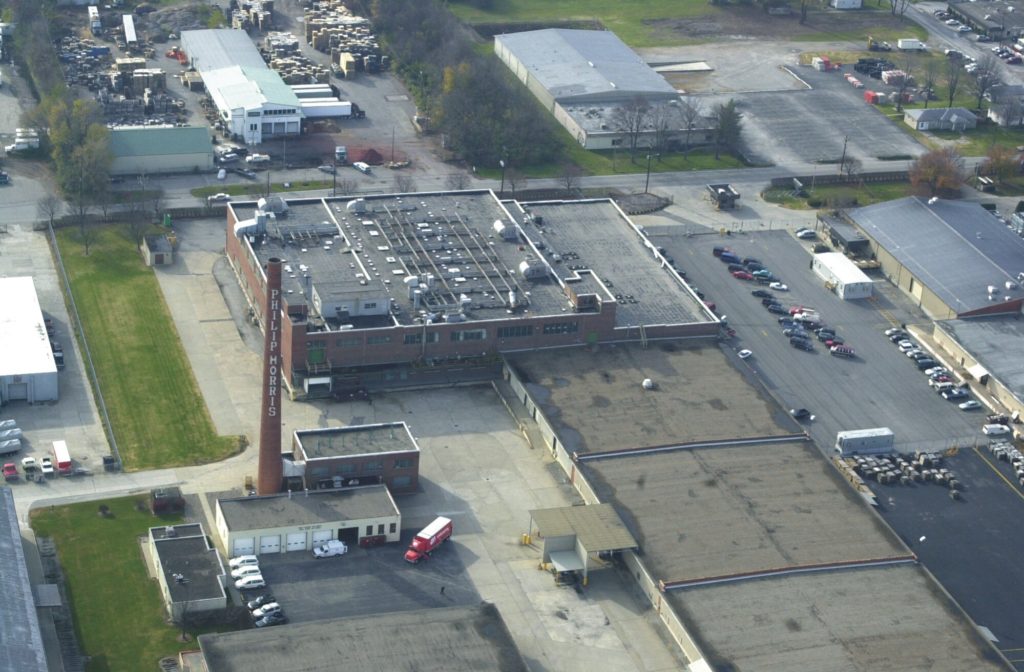
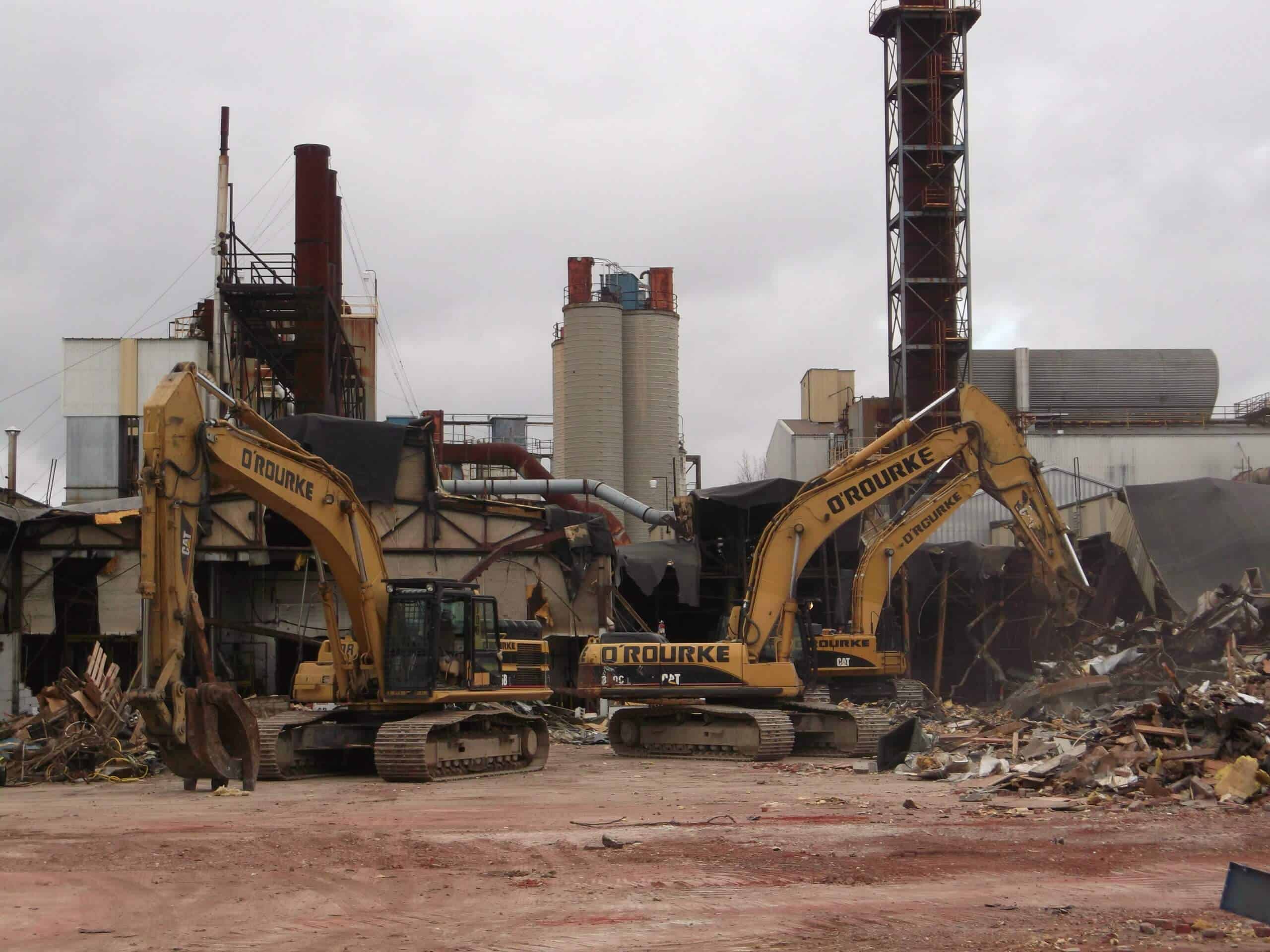
Industrial demolition often requires a more technical approach. Manufacturing plants, processing facilities, utility structures, power-related facilities, equipment pads, pipe racks, tanks, conveyors, and heavy structural systems can create unique safety and environmental concerns.

O’ROURKE has experience with demanding industrial environments where planning, equipment selection, sequencing, and material handling are critical. These projects may include reinforced concrete, structural steel, heavy machinery foundations, contaminated materials, confined areas, and complex site layouts.

Structural Demolition

Structural demolition includes the full or partial removal of buildings and other constructed systems. These structures may be made from steel, concrete, masonry, wood, brick, block, or a combination of materials.

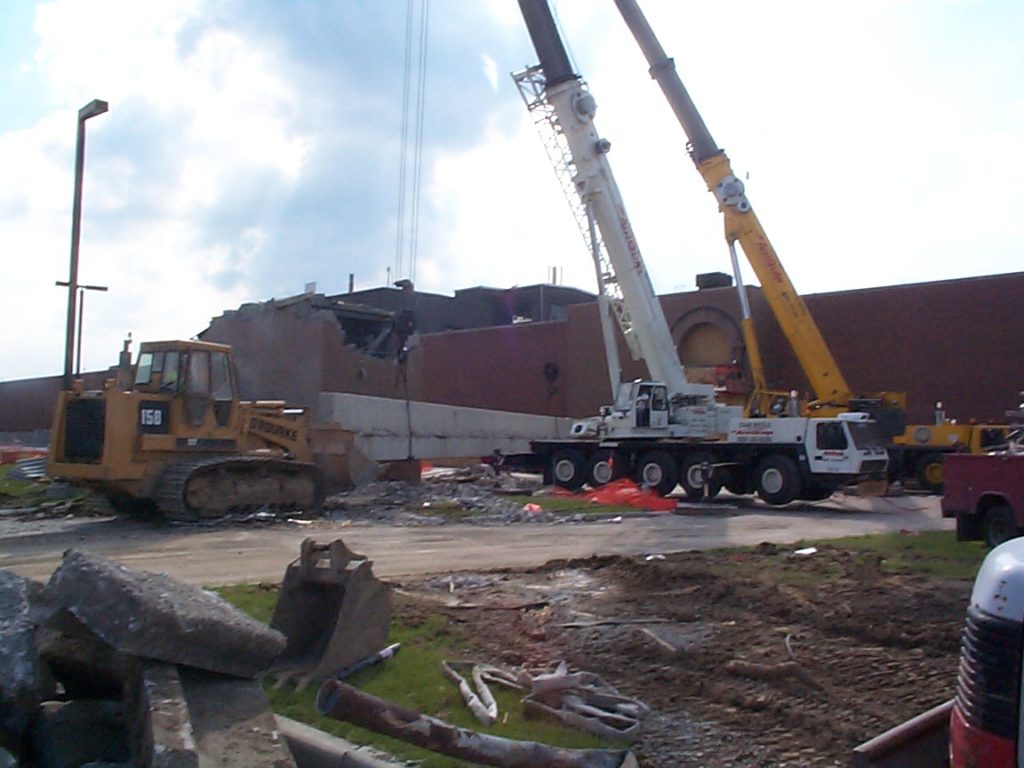
O’ROURKE develops demolition methods based on the structure’s condition, height, material, location, and surrounding risks. Depending on the project, the work may be completed with excavators, high-reach equipment, shears, grapples, hammers, loaders, or other specialized demolition attachments.

Concrete and Foundation Removal

Site demolition often continues below the building shell. Slabs, footers, foundations, retaining walls, loading docks, equipment bases, and reinforced concrete structures may need to be removed before excavation, grading, or new construction.

Concrete removal can be one of the most important parts of a site preparation project. Leaving old foundations, hidden pads, or abandoned structures underground can create problems for the next phase of work. O’ROURKE can break, process, remove, haul, and coordinate recycling or disposal of concrete materials based on the project scope.

Interior and Selective Demolition

Not every site demolition project involves full building removal. Some properties need selective demolition before expansion, renovation, stabilization, or phased redevelopment. Interior demolition may include removing partitions, ceilings, mechanical systems, flooring, fixtures, equipment, and non-structural components. Selective demolition may involve removing part of a structure while preserving another portion.

This type of work requires careful planning so crews remove the right materials without damaging what needs to remain. O’ROURKE can support selective demolition as part of a larger site project or as a stand-alone scope.

Site Clearing and Debris Removal

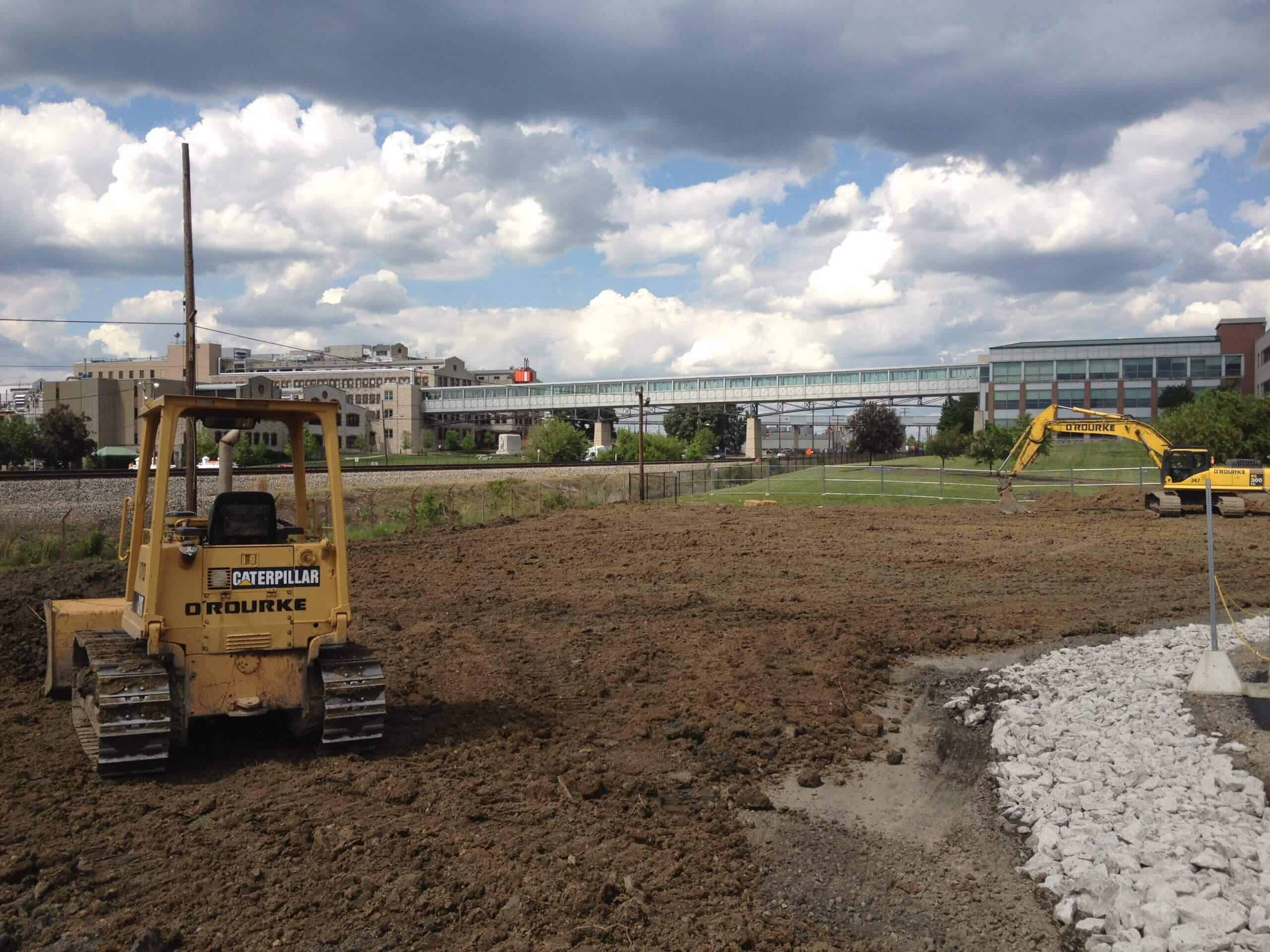
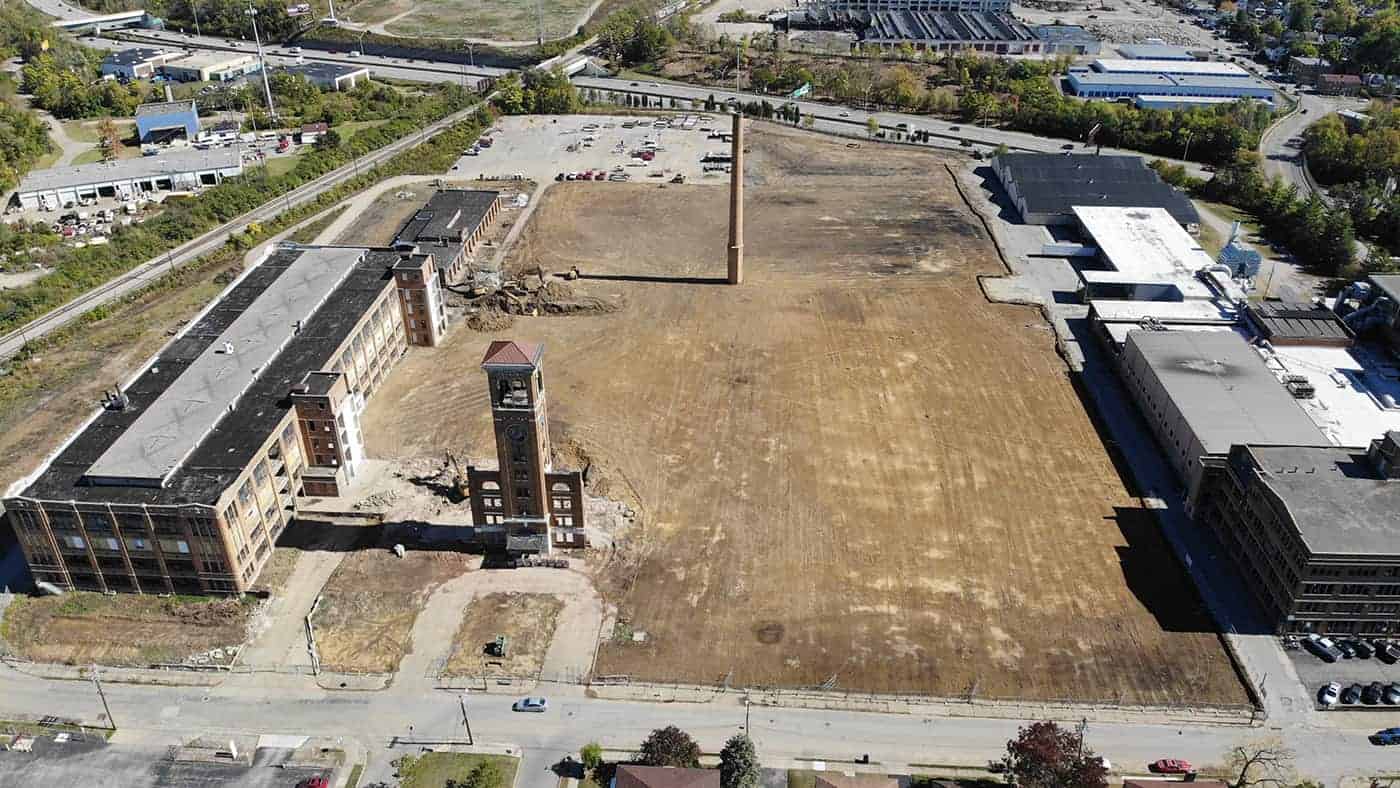
A clean site is easier and safer for the next contractor to work on. O’ROURKE provides site clearing and debris removal to help eliminate demolition debris, scrap material, pavement, abandoned materials, and construction obstructions.

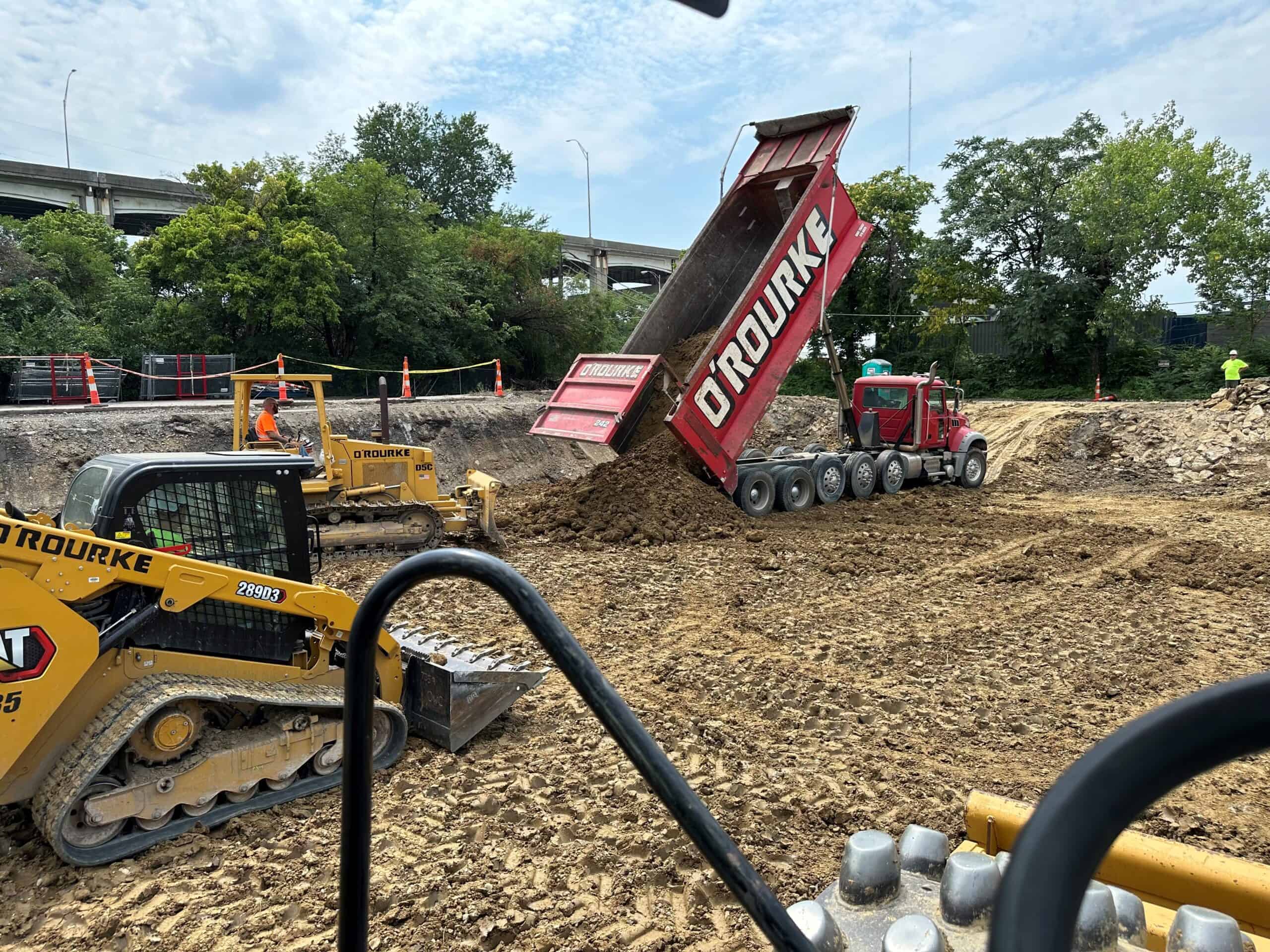
Debris handling may include sorting materials, loading trucks, hauling debris, coordinating disposal, recycling eligible materials, and clearing work areas as demolition progresses. On larger jobs, debris management is not an afterthought. It is part of the production plan.

Safe Demolition for Complex Job Sites

Some demolition projects have open space and simple access. Many do not. O’ROURKE is often called for projects where the site conditions require more planning, more control, and more experience.

Complex job sites may include tight urban properties, active facilities, neighboring buildings, public roads, limited truck access, overhead utilities, unstable structures, unknown site conditions, or environmental hazards. Industrial sites may have pits, tanks, old equipment, process areas, or buried materials that require careful evaluation. Municipal and institutional properties may require additional coordination around public access and safety.

O’ROURKE plans work around these factors before demolition begins. That may mean phasing the work, using specialized attachments, coordinating with facility staff, adding dust control, adjusting truck routes, limiting work areas, or protecting nearby structures.

Safe site demolition depends on disciplined crews and clear communication. Equipment operators, laborers, truck drivers, supervisors, and project managers all need to understand the plan. When site conditions change, the plan may need to change with them.

Environmental Considerations During Site Demolition

Older buildings, industrial properties, and redevelopment sites often include environmental concerns that need to be addressed before or during demolition. These issues can affect the schedule, cost, disposal methods, worker protection requirements, and final site condition.

O’ROURKE helps project teams identify and coordinate around these concerns so demolition can proceed safely and responsibly.

Asbestos, Lead, Mold, and Regulated Materials

Many older structures contain materials that require special handling. These may include asbestos-containing materials, lead-based paint, mold, mercury-containing components, fluorescent lamps, universal waste, contaminated debris, and other regulated materials.

Before demolition begins, the property may need a hazardous material survey or environmental review. If regulated materials are present, abatement or special handling may be required before structural demolition can move forward.

O’ROURKE understands how these conditions affect demolition work. Our team can coordinate with owners, consultants, abatement teams, and regulatory agencies so the project moves in the correct sequence.

Dust, Runoff, and Site Containment

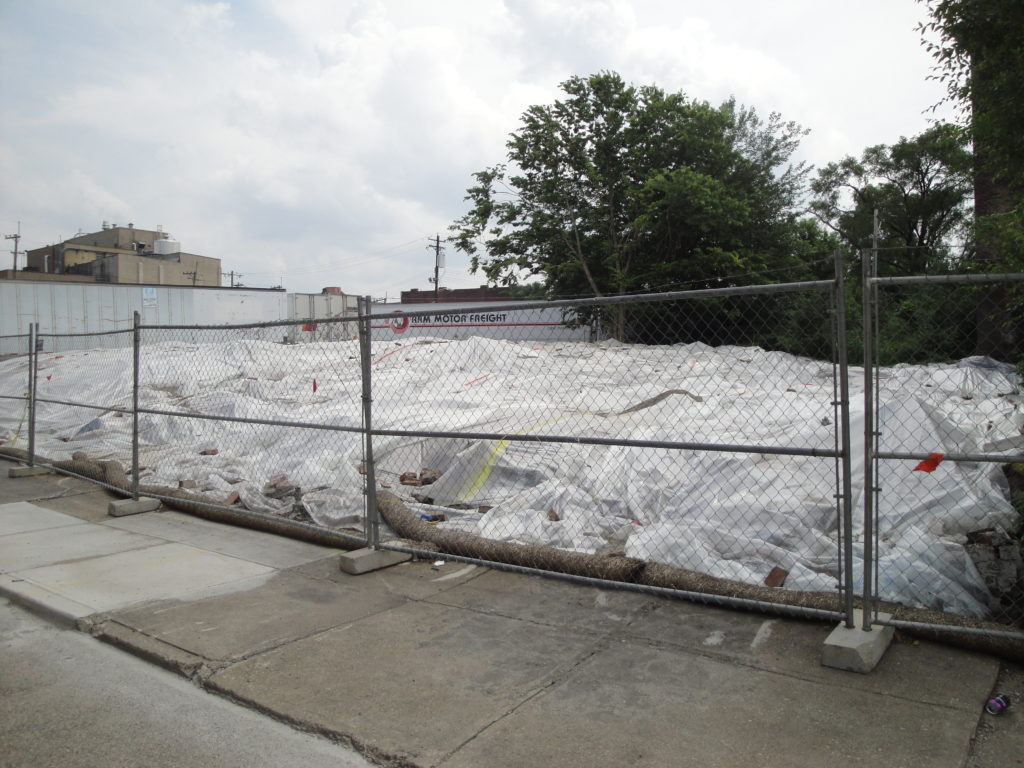
Dust and runoff control are important on most demolition sites. Breaking concrete, processing debris, loading trucks, and removing structures can create dust and loose material if the site is not managed properly.

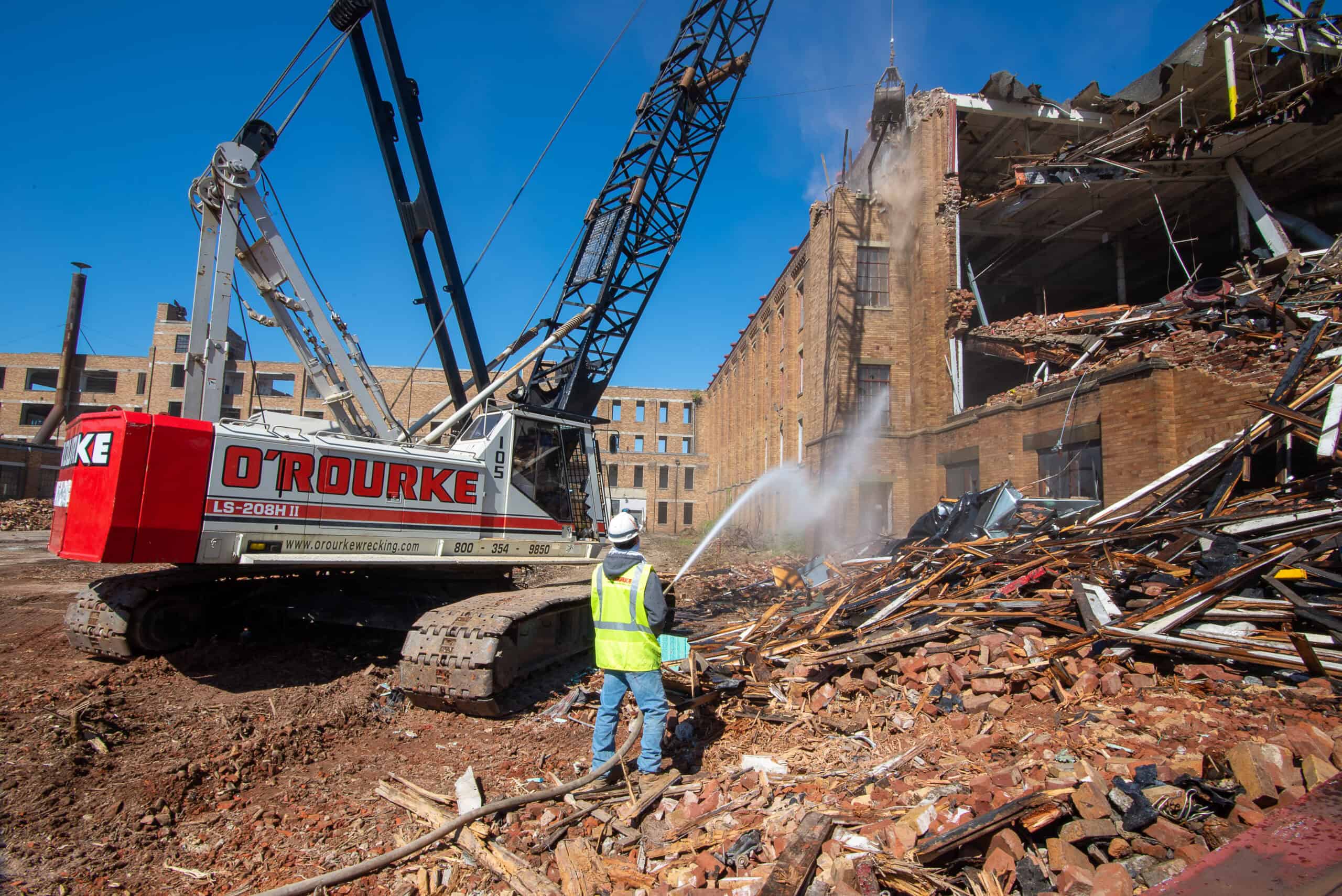
O’ROURKE may use dust suppression, water control, debris containment, erosion control, stormwater protection, fencing, and site cleanup practices based on the conditions of the project. These measures help protect workers, nearby properties, public areas, and the surrounding environment.

Recycling, Salvage, and Responsible Disposal

Demolition creates a large volume of material. Whenever practical, O’ROURKE looks for opportunities to separate recyclable materials such as steel, concrete, brick, block, and other metals. Salvage and recycling depend on the material type, site logistics, contamination concerns, market conditions, and project requirements.

Responsible disposal is also critical. Materials that cannot be reused or recycled must be hauled to approved facilities based on their classification. Proper handling helps protect the project owner and keeps the demolition process compliant.

Our Site Demolition Process

Every demolition project is different, but most site demolition jobs follow a clear process. O’ROURKE uses that process to define the scope, prepare the site, control risks, and complete the work in the right order.

1. Site Walkthrough and Project Review

The process begins with a site visit or project review. O’ROURKE evaluates the structure, access points, utilities, surrounding conditions, site restrictions, and demolition goals. This review helps identify potential issues before they affect the work.

2. Estimate and Scope Development

After the initial review, the demolition scope is defined. This includes what will be removed, what will remain, whether foundations or slabs are included, what materials are expected, how debris will be handled, and what schedule requirements need to be considered.

A clear scope helps avoid confusion later. It also helps owners and contractors compare demolition proposals accurately.

3. Permitting and Utility Coordination

Before demolition begins, utilities typically need to be identified, disconnected, capped, or protected. This may include electric, gas, water, sewer, communications, fire suppression, or other site systems. Permit requirements and local approvals may also need to be addressed.

O’ROURKE can help coordinate this phase so the site is ready for safe mobilization.

4. Hazardous Material Review or Abatement Coordination

If hazardous or regulated materials are present, they need to be identified and addressed before structural demolition starts. This may include asbestos, lead, mold, universal waste, contaminated materials, or other environmental concerns.

Proper sequencing is important. Abatement, documentation, clearance, and disposal requirements can all affect when demolition can begin.

5. Demolition Mobilization

Once the site is ready, O’ROURKE mobilizes crews, equipment, trucks, containers, safety controls, fencing, signage, and other project resources. Site protection measures are put in place based on the project conditions.

This phase sets the field work in motion.

6. Structural Demolition and Material Separation

The structure is demolished in a controlled sequence. Materials may be separated as the work progresses, with steel, concrete, masonry, wood, and mixed debris handled according to the site plan.

Good material handling keeps the project organized. It also supports recycling and helps maintain safer working conditions.

7. Debris Removal and Final Cleanup

After demolition is complete, debris is hauled away, remaining materials are removed, and the site is cleaned based on the agreed scope. If foundation, slab, or pavement removal is included, that work is completed before final cleanup.

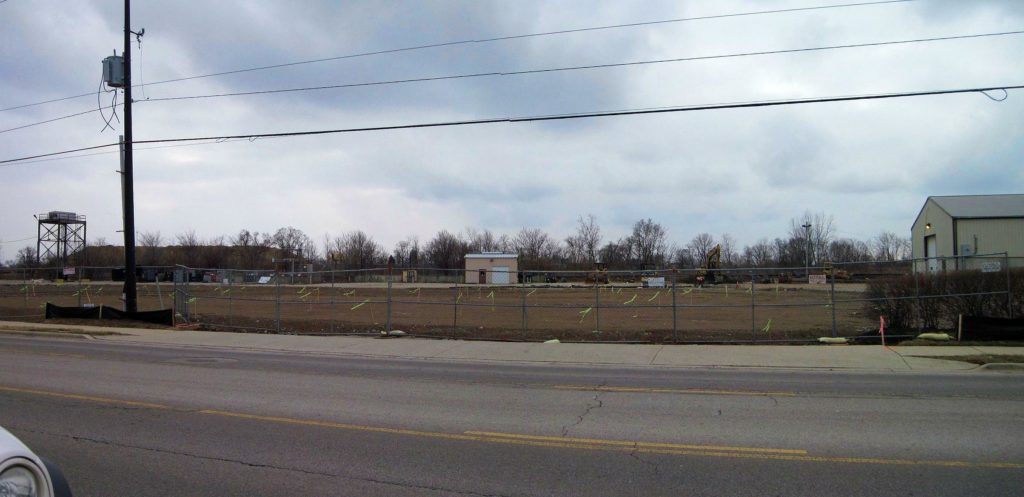
The goal is to leave the property ready for grading, excavation, construction, or the next contractor.

Dust suppression during demolition project

Site Demolition for Redevelopment and Construction Preparation

Site demolition is often the bridge between an old use and a new one. A vacant building may need to come down before a retail center can be redeveloped. An industrial structure may need to be removed before a site can be repurposed. A public building may need to be cleared for a new facility. A warehouse, school, office, or plant may have reached the end of its useful life.

O’ROURKE helps prepare properties for the next phase by removing obsolete structures, slabs, foundations, pavement, debris, and site obstructions. Our team can coordinate with general contractors, developers, engineers, property owners, facility managers, and public agencies so demolition aligns with the broader project schedule.

This coordination matters. If demolition runs late, the next phase may lose time. If buried materials are missed, excavation may stop. If debris is poorly managed, the site can become harder to work on. O’ROURKE plans with the next phase in mind, not just the demolition work in front of us.

Our site demolition services can support:

  • Commercial redevelopment
  • Industrial site reuse
  • Brownfield redevelopment
  • Facility expansion
  • New construction preparation
  • Public infrastructure projects
  • Parking lot or pavement replacement
  • Utility and plant upgrades
  • Institutional renovation or rebuilding
  • Multi-phase construction schedules

A clean demolition site gives the next team a better starting point.

Why Choose O’ROURKE for Site Demolition?

Demolition work carries real risk. The contractor you choose needs the equipment, experience, safety culture, and project discipline to manage those risks from the start.

O’ROURKE Wrecking Company brings decades of demolition experience to commercial, industrial, municipal, and redevelopment projects. We understand how to plan demolition around structures, utilities, hazards, schedules, and the needs of the larger project team.

One Contractor for Everything – Site demolition involves a lot of moving parts — abatement, structural demo, excavation, recycling, grading, documentation. O’ROURKE handles all of it in-house. That means one contract, one schedule, and one accountable team from start to finish.

60+ Years of Experience – Founded in 1962, O’ROURKE has completed thousands of demolition projects across nearly every state in the country. We’ve seen every site condition, every complication, and every regulatory challenge this work can throw at a project. That experience shows.

Ranked Among the Best in the Industry – O’ROURKE is consistently ranked in the ENR Top 10 as one of the nation’s largest specialty demolition contractors. Our reputation is built on projects completed safely, on budget, and ahead of schedule.

Equipment We Own and Maintain Our entire equipment fleet — high-reach excavators, hydraulic excavators, front-end loaders, bulldozers, roll-off trucks, tractor-trailers, and more — is company-owned and maintained on strict preventive maintenance schedules. No rented equipment surprises. No delays waiting on outside vendors.

Industries and Properties We Serve

O’ROURKE provides site demolition services for a wide range of properties and industries, including:

  • Commercial buildings
  • Industrial plants
  • Manufacturing facilities
  • Warehouses and distribution centers
  • Municipal buildings
  • Schools and universities
  • Healthcare facilities
  • Retail centers
  • Office buildings
  • Utility and infrastructure sites
  • Redevelopment properties
  • Brownfield sites
  • Mixed-use properties
  • Institutional facilities
  • Vacant or obsolete structures

If your property has a structure, slab, foundation, pavement area, or site obstruction that needs to be removed, O’ROURKE can review the project and recommend the right demolition approach.

What is included in site demolition?

Site demolition can include structural removal, slab removal, foundation removal, pavement removal, debris hauling, material sorting, recycling coordination, utility coordination, environmental support, and final cleanup. The exact scope depends on the property, the project goals, and what needs to remain after demolition is complete.

How long does a site demolition project take?

The timeline depends on the size and type of structure, the materials involved, site access, permitting, utility disconnects, environmental concerns, debris volume, and whether the project needs to be phased. A small commercial structure may move quickly once approvals are in place. A larger industrial site with environmental or utility concerns may require more planning and coordination before demolition begins.

What happens to demolition debris?

Demolition debris is sorted, loaded, hauled, recycled where practical, or disposed of through approved facilities. Materials such as steel, concrete, brick, block, and other metals may be separated for recycling depending on the project conditions and material quality. Regulated or contaminated materials must be handled according to applicable requirements.

Do older buildings need asbestos or lead testing before demolition?

Many older buildings require hazardous material surveys before demolition. Asbestos, lead-based paint, mold, universal waste, and other regulated materials may need to be identified and addressed before structural demolition begins. O’ROURKE can help coordinate the demolition process around these requirements.

Can you prepare the site for new construction?

Yes. O’ROURKE can remove structures, foundations, slabs, pavement, debris, and site obstructions so the property is ready for grading, excavation, redevelopment, or construction preparation. The final site condition depends on the agreed demolition scope and the needs of the next phase of work.

Do you handle hazardous materials as part of a site demolition project?

Yes. O’ROURKE has an in-house abatement team that handles asbestos, lead, PCBs, and other regulated materials. We conduct the survey, complete the removal, and provide all required documentation — as part of the project, not as a separate contract with a separate sub.

Request a Site Demolition Estimate

Whether you need to clear a single commercial building or prepare a complex industrial site for redevelopment, O’ROURKE can help plan and execute the demolition safely and efficiently.

Our team can review the site, define the demolition scope, identify planning concerns, coordinate around environmental or utility issues, and provide a clear path for removing the structure and preparing the property for its next phase.

Contact O’ROURKE Wrecking Company to discuss your site demolition project, schedule a site review, or request an estimate.